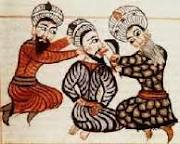
Plastic surgery is a specialized branch of surgery devoted to the repair of deformities and the correction of functional defects.
Etymologically, the name derives from two Greek words: “Girurguiki” (surgery, hand, work) and “Plastikos” (to mold). As early as 1798, Desault used the term “Plastique”. Later, Von Graefe included it in his monograph “Rhinoplastik” (Berlin, 1818), but it was a German surgeon, Edmund Zeis, who popularized it when he published his treatise “Handbuch der Plastichen Chirurgie” in 1838, thus naming this surgical branch, which underwent great development from World War I onwards.
The origins
The foundations of plastic surgery can be found in ancient history and represent man’s effort to treat the wounds and defects inflicted by nature or by other human beings. The Ebers Papyrus (1500 BC) shows that tissue transplantation was practiced by the Egyptians in 3500 BC. The Vedas, sacred books of the same antiquity, tell that both flaps (1) and grafts (2) were known in India. In the 7th century BC, Susruta describes techniques for the reconstruction of the nose, ear and lips that were performed in India 2500 years BC. It was customary to punish prisoners of war, adulterers and criminals by mutilating the nose. The frequency of the procedure led to the development of an ingenious method of repairing such a loss, which, with some modifications, is still used today. In Roman times, Celsus (25 BC) used, in his classic writings De Medicina, designs to mobilize tissues that today we call advancement flaps.
The Byzantine royal physician Oribasius also included in his medical encyclopedia Synagogue Medicae 2 volumes devoted to the reconstruction of facial defects, mainly of the nose. In addition, numerous procedures have been described, from the treatment of facial fractures to operations on malformations of the urinary tract such as hypospadias.
At that time, those devoted to such a skillful activity were the koomas, or potters, who held the secret of manipulating living tissues. With the skin of the forehead they made a flap, which they rotated and incorporated into the rest of the existing nose. When the distal end had “taken” on the recipient bed, they cut the pedicle and the excess was returned to its place of origin. From India this knowledge was passed on to Persia and Arabia and later to Greece and Italy. Later, the Arabs brought the works of Sushruta to the West.
In the Middle Ages, and despite the continued use of established methods, the fall of the Roman Empire in the 5th century and the subsequent spread of the barbarian tribes unfortunately brought the development of reconstructive surgery to a halt. Christianity did not allow progress in this field to continue either. In the 13th century, Pope Innocent III specifically prohibited surgical procedures.
At that time, the practice of medicine became an ethereal experience in which contact with the patient was to be avoided. The manual work required to perform operations was considered dishonorable and a sign of baseness. This, together with the beginning of the era of barber surgeons, worsened the reputation
of surgery even further.
Renaissance: surgery re-emerges
In the 14th century, the sciences were reborn and surgery with them, this time with important contributions from both East and West. It was the Turk who described techniques for the treatment of gynecomastia (breast development in men), considered the first indications for the removal of breast glandular tissue for aesthetic reasons, and the basis of current breast reduction techniques.
It was the Branca brothers in Sicily (15th century) who reintroduced the Hindu method of nasal reconstruction and modified it using a skin flap from the arm. Gaspar Tagliacozzi (1545) is considered a key figure in the development of plastic surgery for his detailed work on pedicled flaps, especially for nasal reconstruction. However, at the end of the 16th century Europe entered a new stage of cultural decline, superstition and scientific ignorance.
In the 19th century, on the other hand, this surgery experienced a resurgence, probably associated with advances in anesthesia (the century of surgeons). Von Graefe used nasal reconstruction techniques during the Napoleonic Wars; Dupuytren described palmar fibromatosis and classified burns according to their depth; von Langenbeck developed the treatment of cleft palate; Sir Astley Cooper performed the first skin graft… their important contributions have lasted to this day. It was also the time when the term “plastic surgery” became popular and appeared as such in various treatises.
The birth of cosmetic surgery
The refinement of reconstructive techniques, together with the reduction in surgical risks offered by anesthesia and the sterile technique developed by Lister, made it easier, and led people to start considering, to apply plastic procedures to improve the appearance of facial structures, even if these had not been injured or mutilated.
The American John Roe is considered the first surgeon to perform an aesthetic approach to the nose. Later, the German Joseph published an exhaustive analysis of the nose, which included a classification and techniques for repairing the various aesthetic nasal alterations. For this important work he is considered the father of cosmetic nasal surgery.
From the beginning, problems and conflicts arose in relation to cosmetic surgery that are still fully relevant today, such as dysmorphophobia (a distorted perception of one’s own image), which in the specific case of the nose was called rhinomania.
The wars
Despite the enormous development of reconstructive and aesthetic techniques during the 19th century, the specialty did not exist as such. Almost no surgeon was devoted exclusively to this field, since it was considered not to be a priority and not intended to save lives.
World War I is the turning point where the importance of what we now consider plastic surgery began to be recognized. The enormous number of patients wounded by projectiles forced the organization of specialized centers in both Europe and the United States. From these centers emerged the “fathers” of many of the techniques we use today and of the instruments they require. With the peace and relative prosperity of the interwar period, a new branch of plastic surgery appeared: “aesthetic” or “cosmetic” surgery.
In the United States, Vilray Papin Blair, a surgeon from St. Louis, established the first specific plastic surgery service at Barnes Hospital of Washington University. He published reference works on mandibular reconstruction and, together with Barret Brown, developed and refined the split-thickness skin graft technique.
In France, Morestin created and directed one of the first teams devoted to plastic surgery at the Val de Grace military hospital in Paris, where he brought to light some of his greatest contributions to the field: the idea of subcutaneous dissection for tension-free closure of defects, the serial excision of large lesions, and the refinement of Z-plasties for the correction of linear contractures. Morestin’s work inspired his disciples, who continued the work he had begun. One of them was the British Harold Gillies, who later founded the Reconstructive Center at Queen Mary’s Hospital in Kent. For his impressive work both in developing new techniques and in training plastic surgeons around the world, he was knighted by the Queen of England.
With World War II and its horrors, the field of plastic surgery expanded enormously and was no longer more or less confined to maxillofacial reconstruction. After the war, publication began of “Plastic and Reconstructive Surgery” in the USA and of the “British Journal of Plastic Surgery”. The successive Plastic Surgery Societies were also created.
In Spain, some general surgeons began, out of personal interest or necessity, to use basic plastic surgery techniques in the treatment of their patients. In the 19th century, Hysern and Argumosa stood out, developing original tissue transplantation techniques. At the beginning of the 20th century, Professor Cortes Llado, Chair of Surgical Pathology at the Faculty of Medicine of Seville, visited the French school led by Morestin and set down his knowledge in his book entitled “Cirugía Plástica Facial”. In it he already pointed to the “wise decision of bringing together in individual services surgeons who have shown an interest in and aptitude for this very special kind of surgery, which is based on the possibility of mobilizing and transplanting tissues of the body.” In the same book he defines the aim of plastic surgery as the “preservation of form or morphological perfection, which most of the time is linked to a physiological aim such as the preservation or recovery of function”.
But it was not until the Civil War of 1936-1939 that the great demand from those mutilated in the war drove the development of plastic surgery in our country. Captain Sanchez Galindo visited prestigious services such as Blair’s in the United States, and on his return the first Plastic Surgery Service was created at the “Hospital General Mola” in San Sebastián. After the end of the war it moved to the Gomez Ulla Hospital in Madrid. Almost simultaneously, the Red Cross began to create plastic surgery services in Madrid, Barcelona, Seville and Valencia.
Since then, the following dates have marked important advances in this specialty:
In 1955, plastic surgery was recognized in the Specialties Act under the name of Reconstructive Surgery, which was later changed to Plastic and Reconstructive Surgery. The Ministry of Health is currently studying a new change of name to Plastic, Reconstructive and Aesthetic Surgery, since the latter is an essential integral part of the specialty.
On May 21, 1956, the Sociedad Española de Cirugía Plástica was officially established.
In 1960, the Instituto Nacional de Previsión created the Servicio Nacional de Cirugía Plástica y Reparadora in Madrid. From then on, and coinciding with the country’s socio-economic development, Social Security began creating a hospital network of plastic surgery departments and services.
In 1978, the Comisión Nacional de la Especialidad de Cirugía Plástica was created, which advises the Ministries of Education and Science and of Health and Consumer Affairs on matters such as the training of specialists, the drawing up of programs, qualifications, etc.
In 1986, publication began of the “Revista Española de Cirugía Plástica”, which later changed its name to “Cirugía Plástica Ibero-Latinoamericana” to become the official journal of the Federación Ibero-Latinoamericana de Cirugía Plástica y Reconstructiva. The journal is currently distributed to 24 countries and has a print run of 12,800 copies a year.
Plastic surgery in the modern era
In the second half of the 20th century, plastic surgery grew extraordinarily, developing new procedures in both the reconstructive and the aesthetic fields. In reconstructive surgery, one of the most important advances has been the birth and refinement of microsurgery. With the creation of micro-instruments, ultra-fine suture materials and the manufacture of the binocular surgical microscope in the 1950s, microsurgery revolutionized the field of reconstructive surgery. Microsurgery has dramatically expanded the possibilities of reconstruction with all kinds of flaps, the reimplantation of amputated limbs and the revascularization of devitalized limbs. In 1965, Krizek performed the first experiment with a free transplant. The same year, in Japan, Tamai and Susumi described the first successful reimplantation of an amputated digit. In 1972, Harii and Ohmori, also Japanese, performed the first free flaps in humans.
In 1969, the American Harry Buncke (father of microsurgery) performed his first free microvascular omentum transplant to repair a large scalp defect.
In this period, cosmetic surgery experienced an even greater explosion. Anesthetic and surgical safety, improved living standards and the growing importance of image in our society have contributed to the flourishing of this branch. Currently, the most common aesthetic technique is liposuction, described by the Italian dermatologist Arpad in the early 1970s.
The second most frequent procedure is breast augmentation, with an estimated 25,000 procedures a year. Since Cronin’s first silicone gel implants (1963), breast implants have evolved enormously, and a wide variety of volumes, sizes and shapes is now available. Likewise, techniques for facial and body harmonization and rejuvenation have been described and refined.
Various world, European and Spanish organizations define the specialty of plastic surgery. Among them, it is worth highlighting IPRAS (International Confederation for Plastic Reconstructive and Aesthetic Surgery), which, as an association of 88 national societies worldwide, promotes scientific progress and exchange, sponsors meetings and works to improve the standards of the specialty, and FILACP (Federación Ibero-Latinoamericana), which brings together Spain and Portugal and all the Spanish- and Portuguese-speaking countries of the Americas.
In Europe, EURAPS (European Association of Plastic Surgeons) stands out. In addition, plastic surgery is one of the 24 member specialties of the European Union of Medical Specialists (UEMS).
In Spain, the Sociedad Española de Cirugía Plástica, Reparadora y Estética (SECPRE) aims to contribute by all the means at its disposal to the scientific progress and practical knowledge of plastic surgery. This mission is carried out by holding scientific sessions, editing and periodically publishing the journal “Cirugía Plástica Ibero-Latinoamericana” and occasional publications, and organizing courses, lectures, meetings, exhibitions and more.
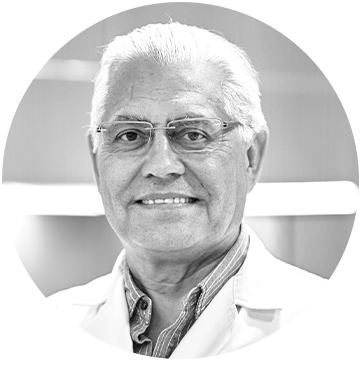
Dr. Alfredo Fernández Blanco
The plastic surgeon Dr. Alfredo Fernandez Blanco stands out in his branch of medicine, as the best breast surgeon, he is also a pioneer in the so-called secondary surgeries or sequelae. With more than 30 years of experience and thousands of successful cases, he continues to achieve the most natural results that can be expected in a cosmetic surgery operation.