Beard and mustache alopecia, or the absence of beard and mustache hair, or alopecia areata, can be remedied thanks to beard or mustache implants. For this type of transplant, only one or two hairs are grafted at a time. Very tangential incisions are made.
The hair is cut to a length of one cm in order to perfectly adjust its orientation within the incision.
The aesthetic result achieved can be appreciated immediately.
The technique gives excellent results and scalp hairs are generally used. Likewise, they are the ones most similar to the original beard hairs.
It is difficult to find body hairs as thick as beard or mustache hairs.
Beard and mustache hairs have an important particularity: they always grow individually and the hair follicle contains only one hair.
Scalp hairs, on the other hand, grow in more than 95% of cases in the form of small groups of 2 or 3 hairs.
Classically, a strip is extracted from the back of the scalp (FUT).
Under a microscope, the hairs are isolated one by one, that is, the follicles are subdivided into two or three parts. Then, the implantation is carried out within extremely fine incisions of 0.7 or 0.8 mm, or with the FUE technique.
As for the scars in the recipient area and the scar in the donor area, if the surgery is correctly performed with very clean and very fine incisions, with precise implantation of the grafts (from which the skin around the hair shaft has been removed), then there will be no visible scar. It is impossible to distinguish the grafts from the original beard hairs.
In the donor area, the scar will be linear, one millimeter wide and completely invisible, as it is hidden by the hair. Only a complete shave of the donor area could expose it.
In theory, FUE could be used for this type of implant, but its only advantage is avoiding the linear scar in the donor area.
However, it has some drawbacks: the donor area has to be shaved in order to extract the follicles, which will make it possible to detect the transplant for a few weeks.
In any case, the extracted follicles have to be dissected under a microscope to isolate the hairs one by one. The number of hairs extracted will be limited to 1,200-1,500 per day; on the other hand, we can easily obtain between 2,000-2,500 grafts in one day with the classic technique (FUT).
If you would like to receive more information, write to us at [email protected] or visit our Facebook.
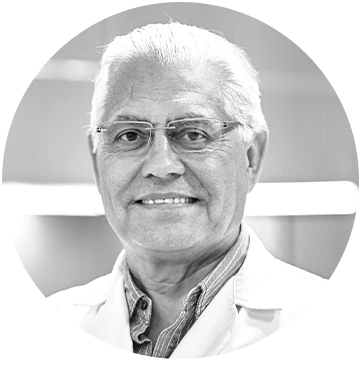
Dr. Alfredo Fernández Blanco
The plastic surgeon Dr. Alfredo Fernandez Blanco stands out in his branch of medicine, as the best breast surgeon, he is also a pioneer in the so-called secondary surgeries or sequelae. With more than 30 years of experience and thousands of successful cases, he continues to achieve the most natural results that can be expected in a cosmetic surgery operation.