Sweating is natural, especially at this time of year. It is our body’s way of keeping cool. However, some people continuously produce excessive sweating, which is a real problem. Hyperhidrosis is defined as frequent and abundant sweating produced spontaneously. Excessive sweating all over the body requires medical attention because it can be a sign of an overactive thyroid, a low concentration of glucose in the blood, or an alteration in the system that controls sweating.
It is a condition that affects men and women equally and that is more common in patients between 25 and 65 years old. The causes of this condition seem to have a certain hereditary tendency, although there are obviously also emotional factors such as stress, tension and anxiety. Excessive sweating can affect the entire surface of the skin, but it mainly appears on the palms of the hands, the soles of the feet, the armpits and the groin. In the most severe cases, the skin may show cracks or peeling and can even give off a bad odor.
Types of hyperhidrosis:
There are two types of hyperhidrosis:
- Primary hyperhidrosis: Focal, it is limited to the armpits, palms, soles, craniofacial area and other specific regions. What causes it to appear is unknown, with a hereditary component involved.
- Secondary hyperhidrosis: Focal or generalized. It affects most of the body surface. It has an underlying cause and should be checked by a specialist.
Treatments
There are different treatment options that the doctor will indicate depending on the type and severity of each patient’s case. These are the main treatments:
- ANTIPERSPIRANTS: Substances that we apply directly to the skin to reduce excess sweating. Aluminum chloride stands out for its ability to plug the glands and break down keratin. Heavy sweating on the palms of the hands, the soles of the feet or the armpits can be controlled to some extent by applying, at night, a solution of aluminum chloride. First, the affected area is dried, then the solution is applied and finally everything is covered with a thin plastic film. In the morning, the film is removed and the area is washed.If the solution irritates the skin, the use of the plastic film should be stopped. Its main adverse effect is skin irritation, which may limit its use.
- ANTICHOLINERGICS: Sweating is caused by the release of a substance called acetylcholine, and anticholinergic drugs act on it.
- IONTOPHORESIS: It is a technique that consists of introducing sweat-inhibiting substances into the skin using an electric current. It is used for localized forms of hyperhidrosis, especially of the hands and feet. After 3 months it can eliminate up to 70% of sweat.
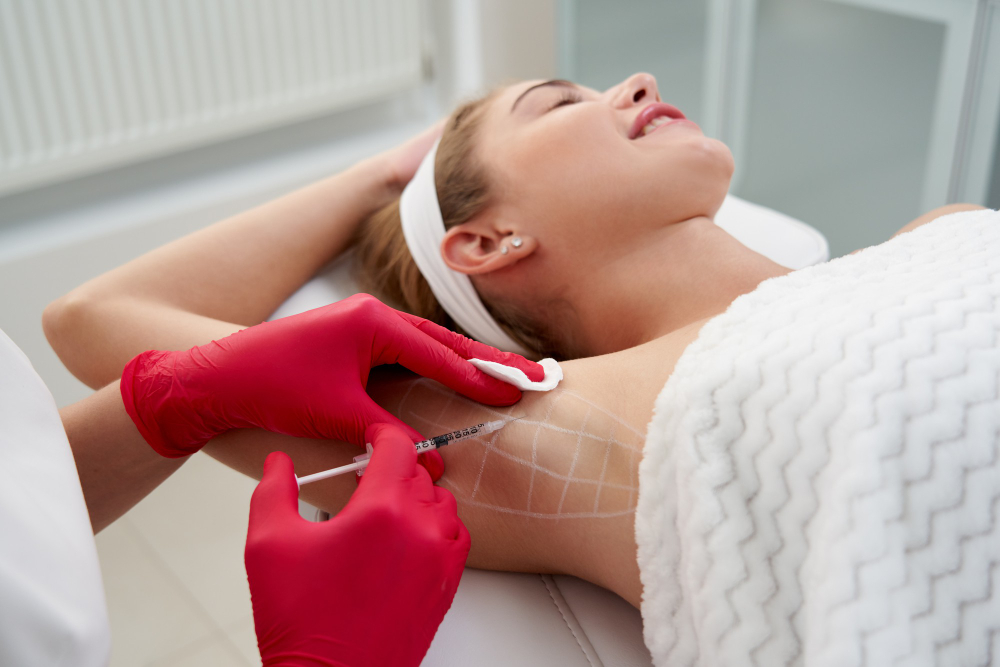
- BOTULINUM TOXIN: Botulinum toxin, or botox, has revolutionized the treatment of patients with idiopathic focal hyperhidrosis. It can be considered the optimal treatment for axillary hyperhidrosis. Applying this substance inhibits the release of acetylcholine, causing a temporary halt in sweat production. The infiltration is carried out through injections with very fine needles, making the treatment practically painless. The session is performed on an outpatient basis and lasts about 15-30 minutes, and the results last approximately 4 to 6 months. The patient can resume normal activity immediately after the treatment. Specialists recommend a second application when excessive sweating starts to return.
- MICROWAVES OR LASER: Microwaves are the latest technique to come onto the market to combat excess sweating. A novel procedure that eliminates the sweat glands by heating. The session is performed in a dermatology office. It is a slightly painful technique that may require local anesthesia. Due to its recent development, the possible health risks of this method are not yet precisely known.
- SURGERY: It is reserved for patients whose cases do not respond to the treatments mentioned above. This operation involves the permanent removal of the sweat glands from a specific area by means of subcutaneous curettage. The results are immediate, although there is a significant risk worth highlighting: compensatory hyperhidrosis (increased sweating in parts of the body that have not been treated, such as the back, buttocks, thighs…).
Botox treatment for excessive sweating
When is botox indicated for heavy sweating?
“In cases where there is pathological excessive sweating. When the patient feels discomfort because of their excess sweat or even, in the most severe cases, lesions, as in the case of plantar sweating, which can lead to eczema or chafing.” – Dr. Fernández Blanco
What does the administration of botulinum toxin involve?
“Just as with botox injections, where muscle paralysis is sought for cosmetic reasons. In this case, botox is infiltrated at the subdermal level with ultra-fine needles and is injected into the areas where the sweat glands are located, so that over the days (3 or 4 days) their blockage and loss of function are achieved.” – Dr. Fernández Blanco
What results does botox offer for excessive sweating? Is it effective?
“The treatment is simple and very effective. It usually lasts between 6 and 8 months. Our patients usually have the treatment twice a year. At the start of summer and before Christmas.” – Dr. Fernández Blanco
Does it have any side effects?
“Botulinum toxin at a local level, as it is placed in the tissue at the subdermal level, has no side effects. No cases of allergies, etc. have been described. Although it is true that the duration of its effects also depends on the individual’s capacity to block and neutralize this botulinum toxin.” – Dr. Fernández Blanco
FREQUENTLY ASKED QUESTIONS
Can heavy sweating be treated?
If the condition is mild, experts usually recommend some type of medication or antiperspirant to help correct or minimize its effects. In the most severe cases, surgery can be chosen to put an end to excessive sweating, but this option involves more risks, since it requires a surgical procedure. As an alternative to the operating room, there is a treatment that is effective and improves quality of life: botulinum toxin, or botox.
Remedies to prevent excessive sweating?
- Drink cold water.
- Avoid eating certain foods: coffee, tea, spicy food, cola and energy drinks…, or eating food that is too hot, which clearly raises body temperature.
- Increase your intake of fruit, vegetables, oily fish and nuts.
- Wear cool, loose clothing: Lycra garments and other synthetic fabrics will make the problem worse.
- Keep your home and workplace cool and well ventilated.
- Reduce the psychological factors related to sweating, such as stress, tension and anxiety.
- Take extra care with personal hygiene and use deodorant products to reduce body odor as much as possible. Be careful: do not use scented deodorants.
- Use boric acid or talcum powder to regulate sweating, especially on the feet.
- Botulinum toxin is another option to put an end to excessive underarm sweat. If the sweating problem is severe, injecting botox into the sweat glands can help, as it blocks their function.
- If excessive sweat affects the face, medications that prevent the stimulation of the sweat glands can help you, but always on a doctor’s recommendation.
At Clínica Dr. Fernández Blanco (Madrid and Málaga) we help you solve your hyperhidrosis problem
- Treatment time: 20 minutes
- Practically painless procedure
- Results from the third day
- Duration of effect: between 6 and 8 months
Dr. Alfredo Fernández Blanco
The plastic surgeon Dr. Alfredo Fernandez Blanco stands out in his branch of medicine, as the best breast surgeon, he is also a pioneer in the so-called secondary surgeries or sequelae. With more than 30 years of experience and thousands of successful cases, he continues to achieve the most natural results that can be expected in a cosmetic surgery operation.